Essays on intercultural leadership and life in the Gulf workplace, by Dr Victoria Hopkin.

Why nationality is the least useful thing you know about the people you lead, and the five-dimension lens that beats it.

Every resignation happens twice, and your dashboard only ever meets the second one.

Hiring was the easy half. Retention is decided in the informal life of your company.
In Translation · by Dr Victoria Hopkin
A series on AI, language and cultural intelligence: what the machines do to the way we speak, learn and lead across cultures, and what schools and leaders in the Gulf should do about it.
Dr Victoria Hopkin · September 2026
Whose English do the machines speak?
Three filters decided which English counts as normal, and the writing assistant now applies that verdict to every pupil who types. On errors, features, and when to decline a correction.
Dr Victoria Hopkin · September 2026
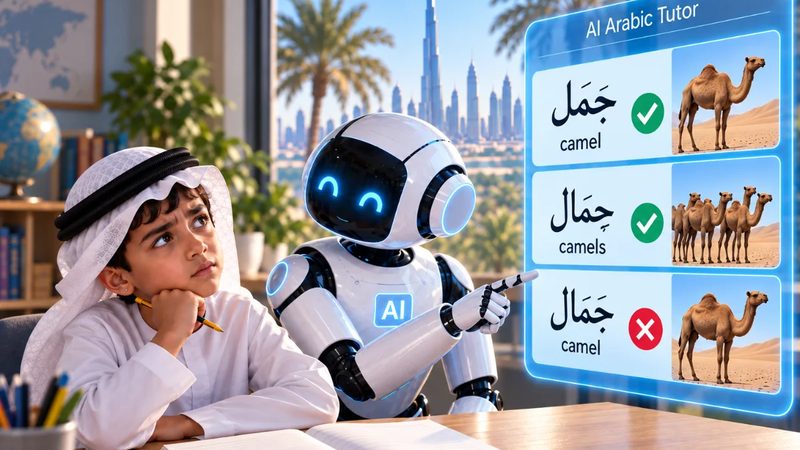
What the models still get wrong
The models understand spoken Arabic and refuse to produce it, and they read vowelled text worst of all. Three tests for any Arabic tool, ahead of Dubai’s 200-minute policy.

Dr Victoria Hopkin · September 2026
What instant translation does to the reasons for learning a language
The phone has satisfied one of the two motives that carry a language learner, and left the other untouched. Why the case for Arabic in Dubai is stronger, not weaker, than the prospectus claims.
Dr Victoria Hopkin · September 2026
The end of the silent language learner?
The machine gets the anxious pupil talking, and somewhere between week six and week twelve it stops being a reason to talk. On the on-ramp, and teaching the handover to people.

Dr Victoria Hopkin · September 2026
Cultural intelligence in an age of AI advice
Leaders now ask the machine how to handle people, and it answers as a well-meaning consultant from Minneapolis. On the jagged frontier, and taking the answer to the room.
Dr Victoria Hopkin · August 2026
What the argument over bilingual children left standing
The better-brain claim did not survive. What did survive is the child who knows the adult cannot see the small car, and why she is unusually well placed to work with a machine.
Dr Victoria Hopkin · June 2026
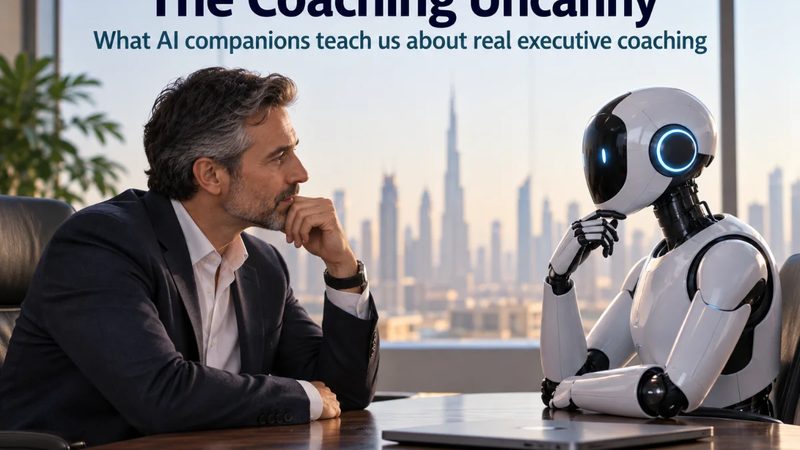
What AI companions teach us about real executive coaching
A randomised trial this year overturned the field’s headline finding. The line between machine and coach is not a line between what each can do: it is a line in time.
Dr Victoria Hopkin · October 2026
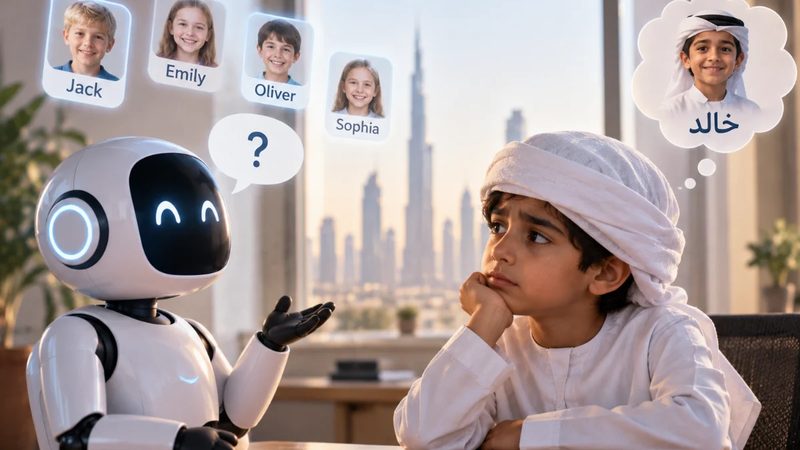
AI and the non-Western child
A name the tokeniser has rarely seen arrives as debris, and one kind of child gets the future while another gets the desert. Three audits a school can run in an afternoon.
AI in Education · by Dr Neil Hopkin
Papers on artificial intelligence, learning and school leadership, across the Leading Education Series (2024) and the AI in Education Series (2025).
Frontiers of learning
Dr Neil Hopkin
A new frontier for teaching, learning and leadership: what happens when AI stops answering and starts acting.
Dr Neil Hopkin
Past the adaptive-quiz era: how AI can extend, rather than merely tailor, human thinking.
Dr Neil Hopkin
What generative models make possible when every learner can inhabit a world built for them.
Dr Neil Hopkin
A new age of hybrid teaching and learning, and the changing division of labour between teacher and machine.
Dr Neil Hopkin
A short provocation on immersion, embodiment and what a field trip is actually for.
Dr Neil Hopkin
The future of expertise in the age of AI, read through one of the field’s most important tutoring studies.
Dr Neil Hopkin
AI, hallucination and human learning: what OpenAI’s own confession about model errors teaches us about pedagogy.
Dr Neil Hopkin
What the pandemic taught, what schools forgot, and how AI reopens the hybrid question.
Minds & childhood
Dr Neil Hopkin
AI, cognitive offloading and the future of thinking: what we hand over when the machine remembers for us.
Dr Neil Hopkin
What MIT’s study reveals about AI and children, and why the findings should reshape classroom use.
Dr Neil Hopkin
Listening to the pupils themselves: children’s own accounts of the machines entering their classrooms.
Dr Neil Hopkin
Children will grow up with AI either way; the question is whether their childhoods are shaped deliberately or by default.
Literacy & governance
Dr Neil Hopkin
How systems worldwide are defining what every teacher and pupil now needs to understand about AI.
Dr Neil Hopkin
The twin agenda: building capability in classrooms while building guardrails around them.
Dr Neil Hopkin
What honesty in schoolwork means when a model can draft anything, and how assessment must respond.
Dr Neil Hopkin
The battle for the future of education? What the model race means for schools choosing their tools.
Dr Neil Hopkin
What OpenAI’s usage report reveals about how people actually use AI, and what schools should take from it.
Dr Neil Hopkin
Tidy, fluent, suspiciously well-organised: what AI-polished schoolwork costs pupils, and where the road actually leads.
Risk, ethics & society
Dr Neil Hopkin
A safeguarding-first guide for schools: where conversational AI puts children at risk, and what leaders must do.
Dr Neil Hopkin
Chatbot tragedies, safety disclaimers and accountability: the incidents forcing the industry, and schools, to confront conversational AI’s risks.
Dr Neil Hopkin
Is your school ready to be “Future Built”? A reflection on BCG’s vision of the data-driven school.
Dr Neil Hopkin
Mobilising the next generation to protect digital privacy, starting in the classroom.
Dr Neil Hopkin
The moral questions AI forces on schools, and a framework for answering them deliberately rather than by default.
Dr Neil Hopkin
Whose knowledge do the models carry? AI as a force for widening, or narrowing, the world’s curricula.
Dr Neil Hopkin
Compute, carbon and classrooms: the sustainability bill behind the digital learning boom.
Dr Neil Hopkin
Between promise and responsibility: preparing pupils for the society their technologies will build.
 The Cambridge
